Do You Need Planning Permission for a Garden Sauna in the UK?
Grain Sauna’s By Grain Property and friends
5min read
Do I need planning permission for a garden sauna?
As outdoor saunas become increasingly popular across the UK, one of the first questions many homeowners ask is:
In many cases, the answer is no but there are important considerations around size, location, foundations, and how the sauna is constructed.
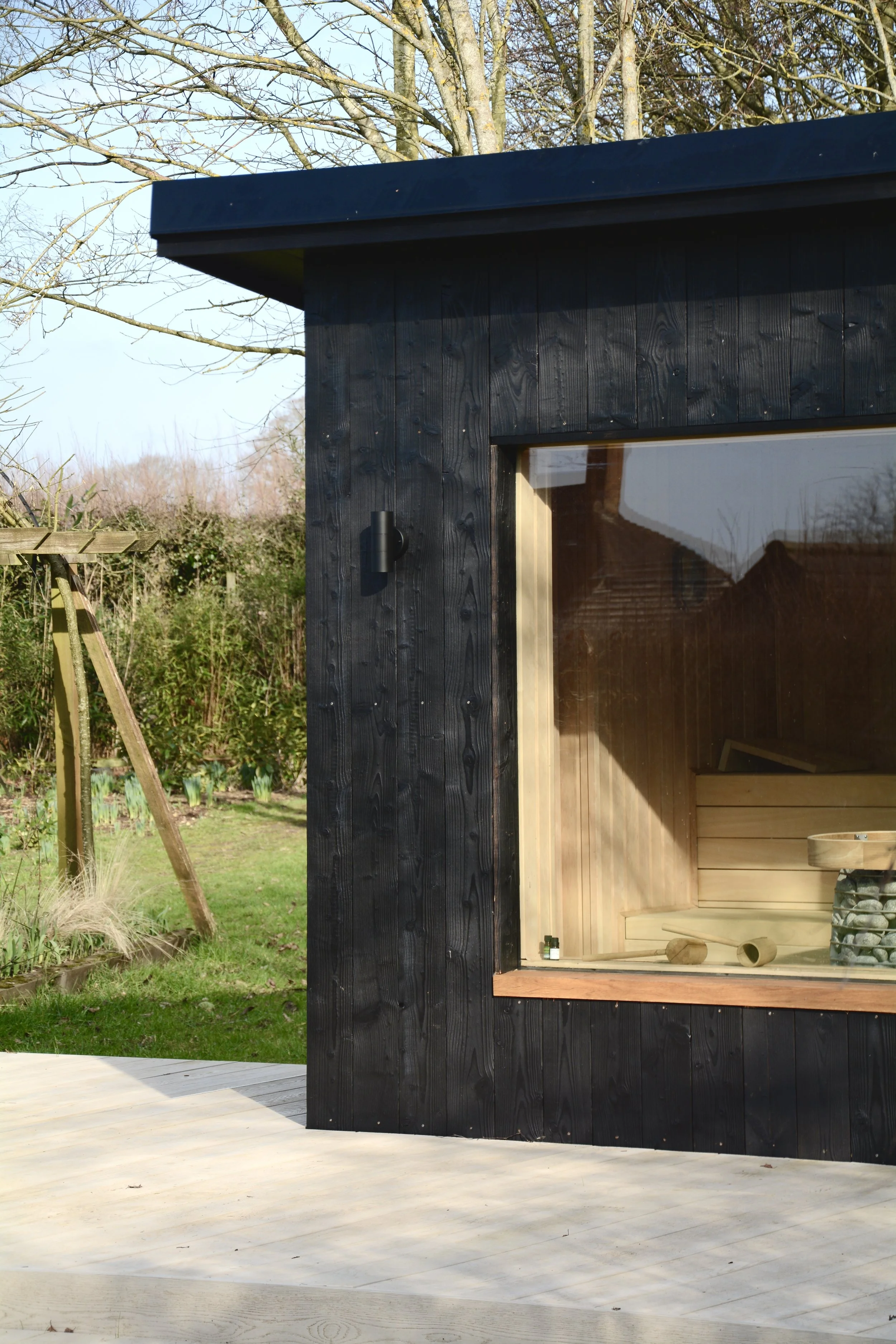
At Grain Saunas, we design and build handcrafted outdoor sauna spaces that are carefully integrated into gardens, landscapes, and commercial settings. Due to every site is different, understanding planning and installation requirements early on is an important part of the process.
Garden Saunas & Permitted Development
Most outdoor saunas in the UK fall under what is known as Permitted Development, meaning planning permission is often not required.
Generally speaking, a garden sauna may not require planning permission if:
It is positioned within the boundary of your property
It is used incidentally to the main home (wellness, relaxation, leisure)
It does not exceed permitted height restrictions
It is not located forward of the front elevation of the house
It does not take up more than 50% of the garden area
However, there are exceptions. Properties located within these below areas may have additional restrictions:
Conservation Areas
National Landscapes (AONBs)
Listed Buildings
Article 4 areas
For this reason, we always recommend reviewing the specific planning context of the property before installation.
We have our own architects and planners who can recommend the best plan of attack.
Are Garden Saunas Considered Temporary Structures?
One of the key advantages of the Grain Sauna installation system is that our saunas are typically installed using large ground screw foundations rather than traditional concrete slabs.
Ground screws are a low-impact foundation system that allows the sauna to sit lightly within the landscape while avoiding extensive excavation or permanent groundwork.
Because the structure can technically be removed or relocated in the future, some installations may be considered more akin to a temporary or movable structure rather than a permanent building. This can sometimes support a stronger case from a planning perspective, particularly where minimal ground disturbance is important.
That said, planning interpretation can vary between local authorities, and there is no blanket rule that automatically exempts movable structures from planning requirements. The overall scale, appearance, and use of the sauna still matter.
At Grain, we take a pragmatic and transparent approach helping clients understand the likely planning position of their project before works begin.
Why We Use Ground Screw Foundations
Beyond planning considerations, ground screws offer several practical and environmental benefits.
Unlike concrete bases, ground screws:
Require minimal excavation
Create less disruption to the garden and less important on the environment. i.e producing large sums of cement.
Can be installed quickly
Are fully removable
Reduce long-term impact on the site
They also allow us to install saunas in more sensitive or difficult locations, including:
sloped gardens
rural landscapes
woodland settings
commercial wellness spaces
This installation approach aligns closely with our wider design philosophy: creating structures that feel integrated into the landscape rather than imposed upon it.
Handmade Off Site in Hertfordshire
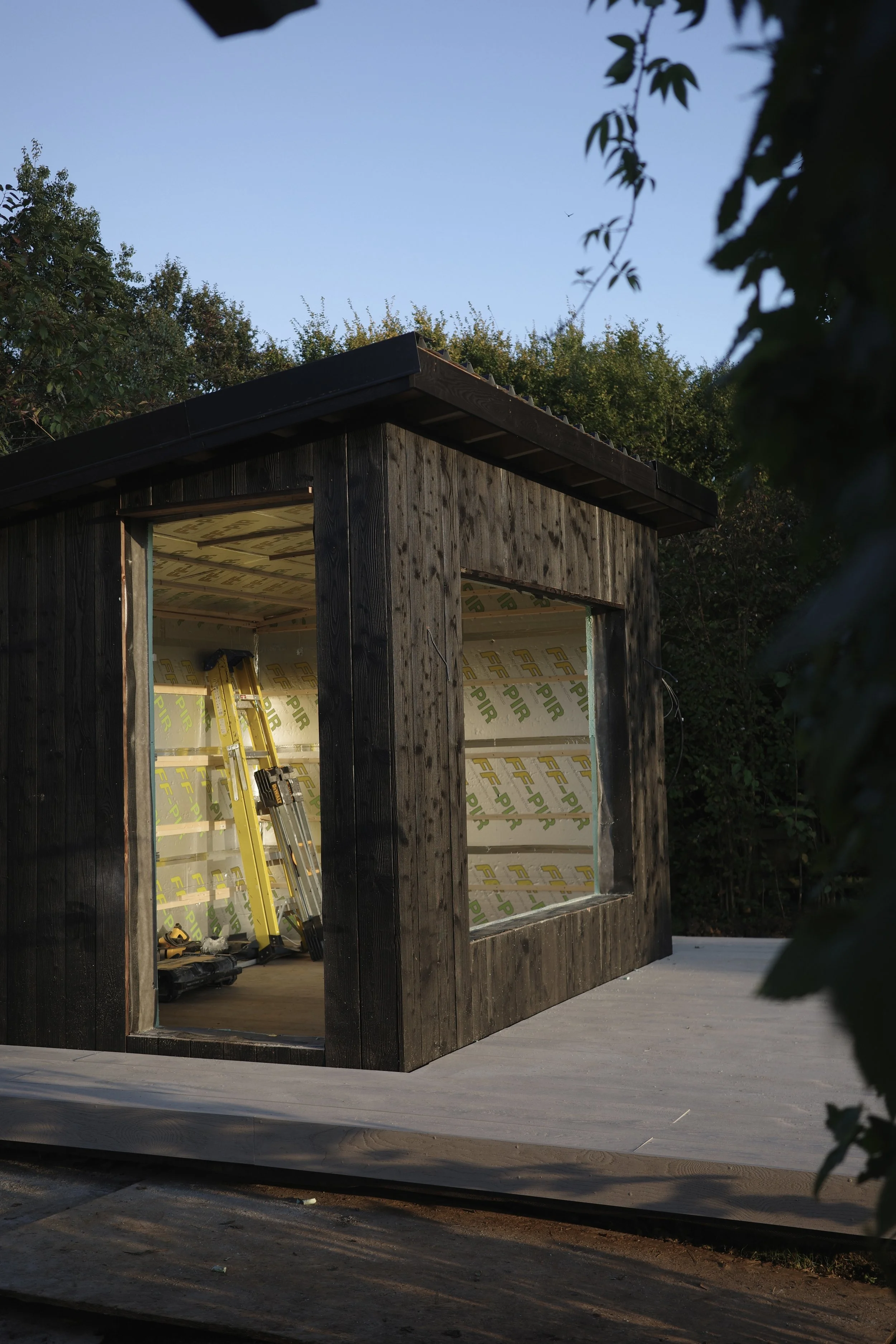
All Grain saunas are handcrafted off site in our Hertfordshire workshop before being transported and installed at the final location.
This off-site construction process allows for a much higher level of precision, quality control, and finish compared to building entirely on site.
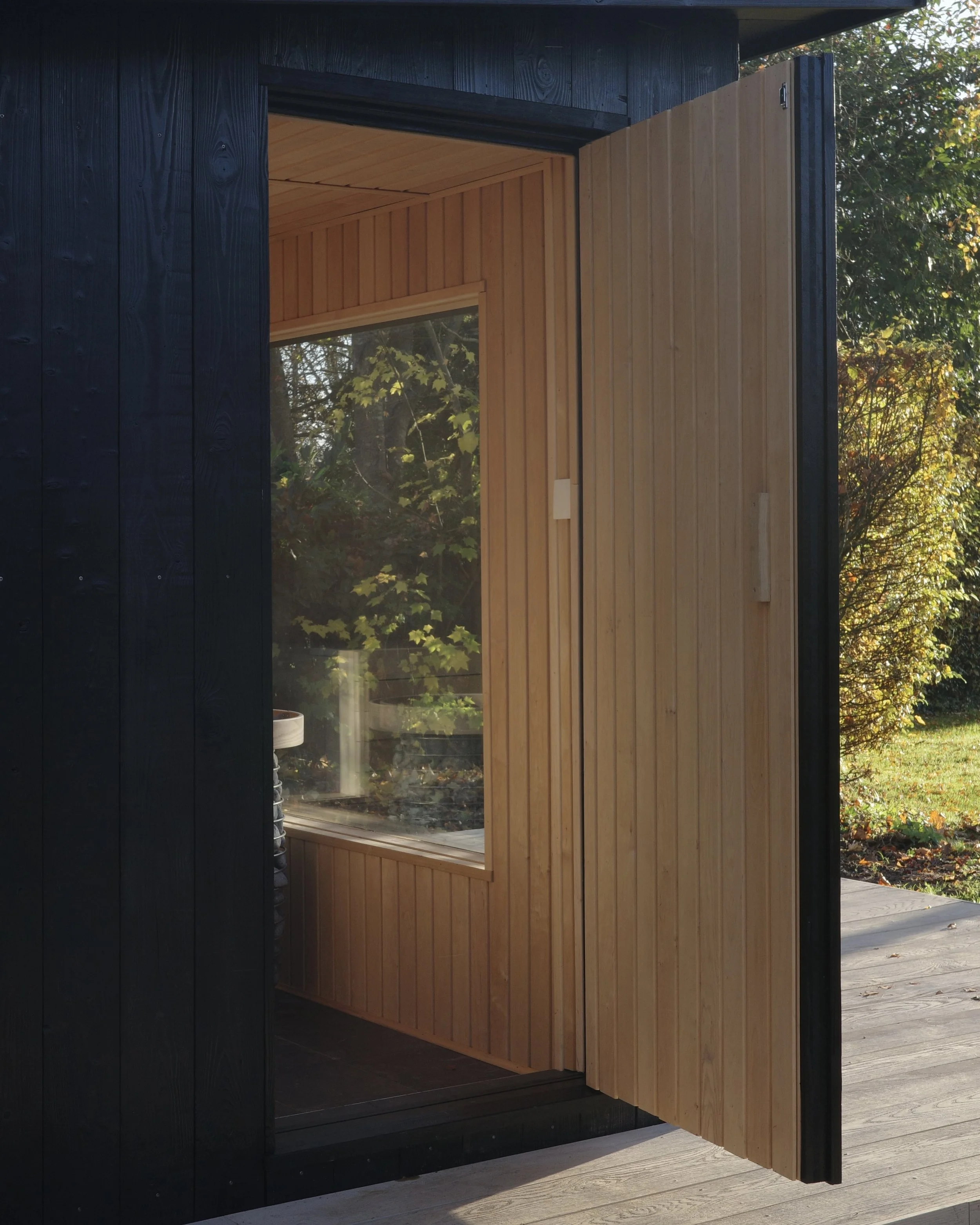
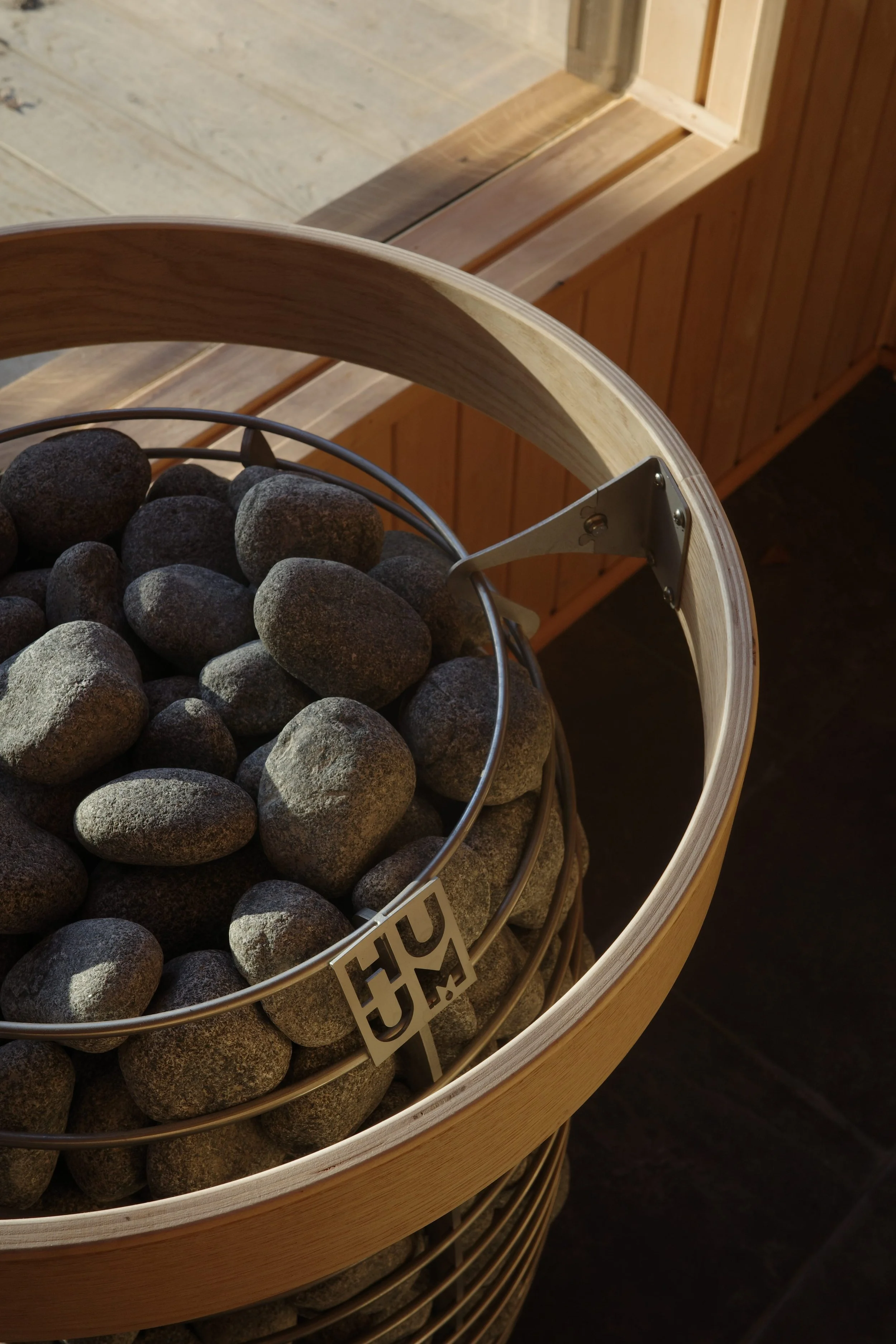
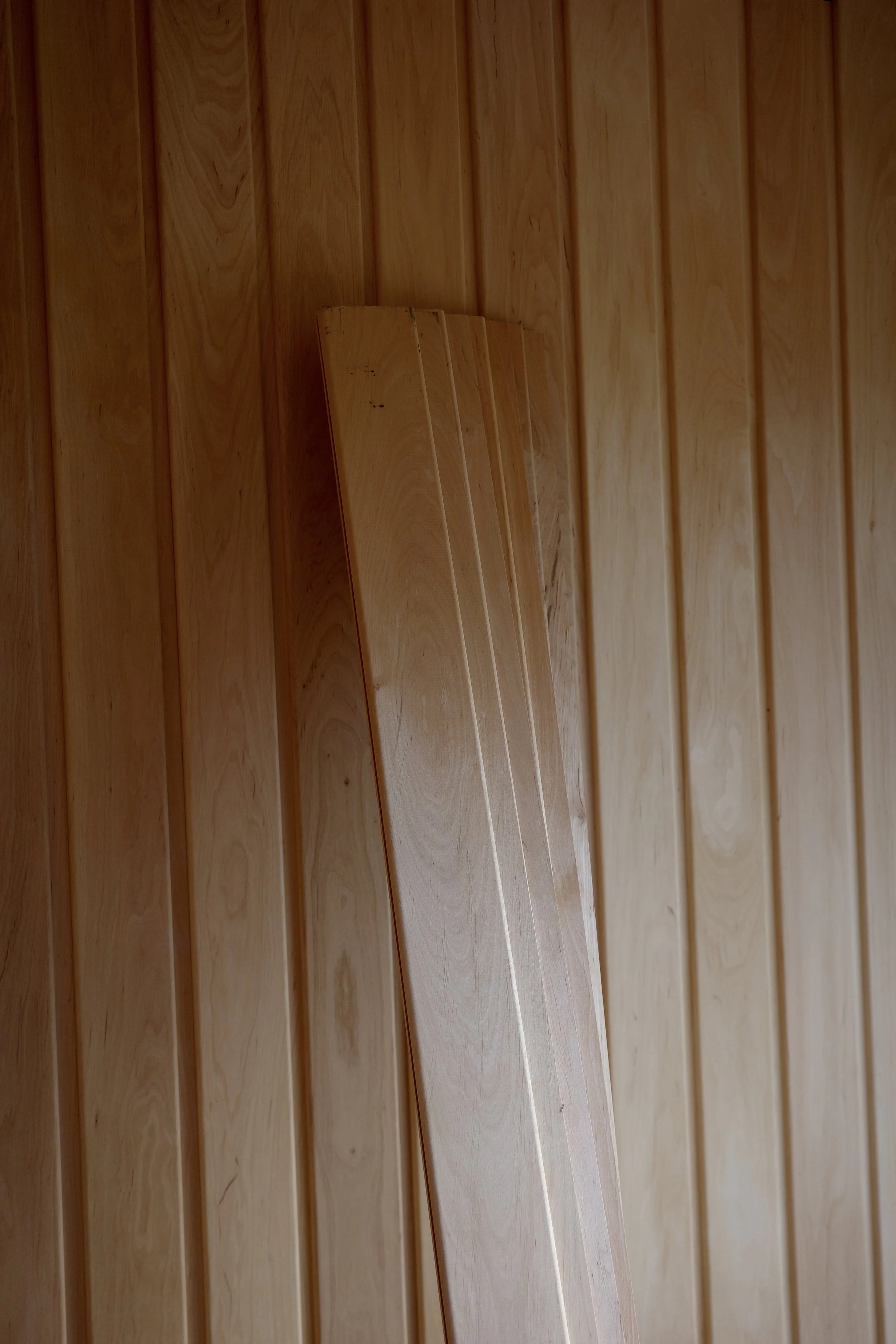
Each sauna is carefully made using premium natural materials selected for:
durability
thermal performance
longevity
aesthetic quality
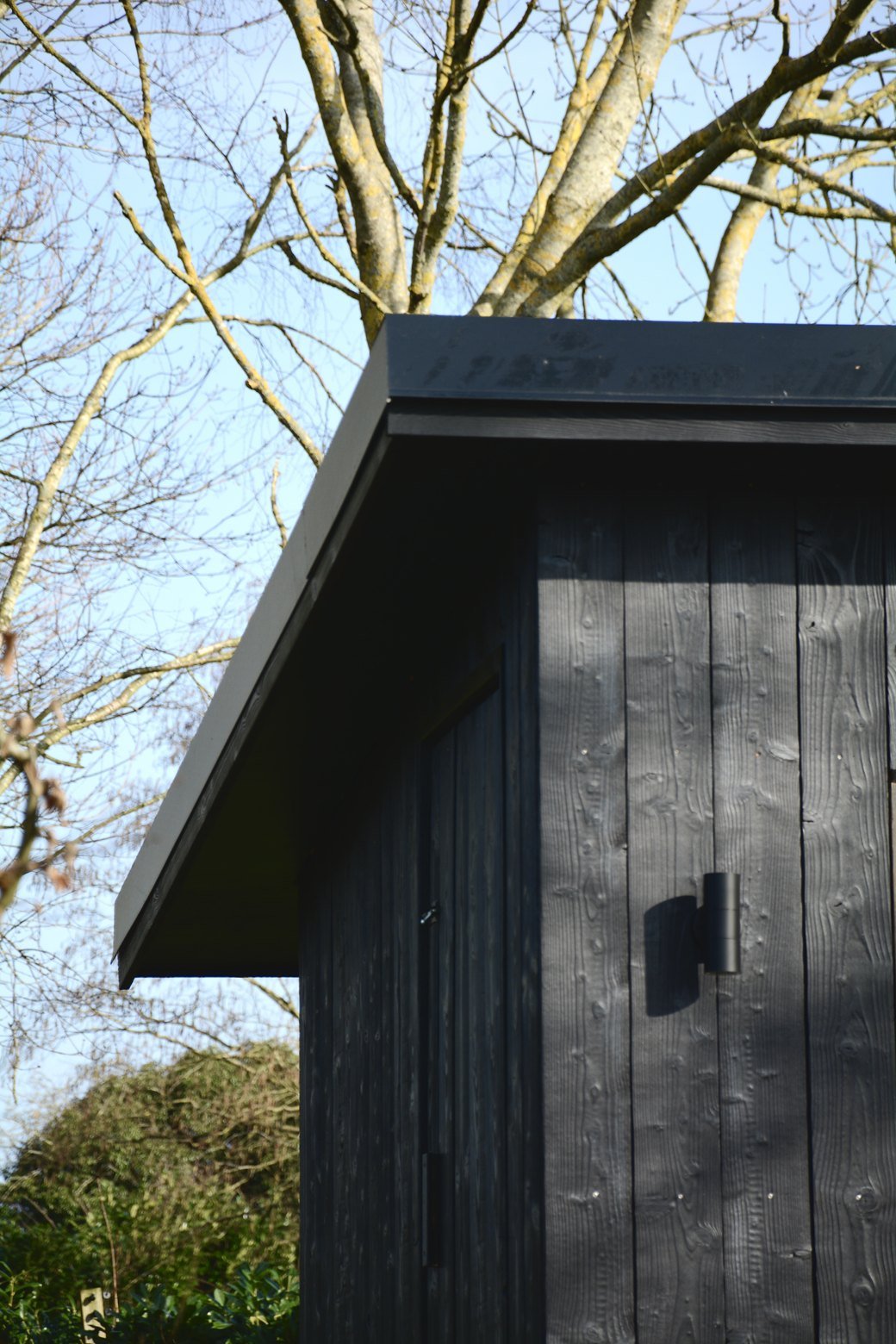
Our work is heavily influenced by Scandinavian simplicity and Japanese minimalism, with a focus on calm, timeless spaces that age beautifully over time.
The majority of the construction takes place off site, installation on location is often significantly faster and less disruptive than traditional building methods.
Premium Materials Designed to Last
Outdoor saunas experience significant fluctuations in heat, moisture, and weather exposure. Material selection therefore becomes critically important.
At Grain Saunas, we use carefully selected timber and natural finishes designed for:
long-term durability
dimensional stability
resistance to moisture and movement
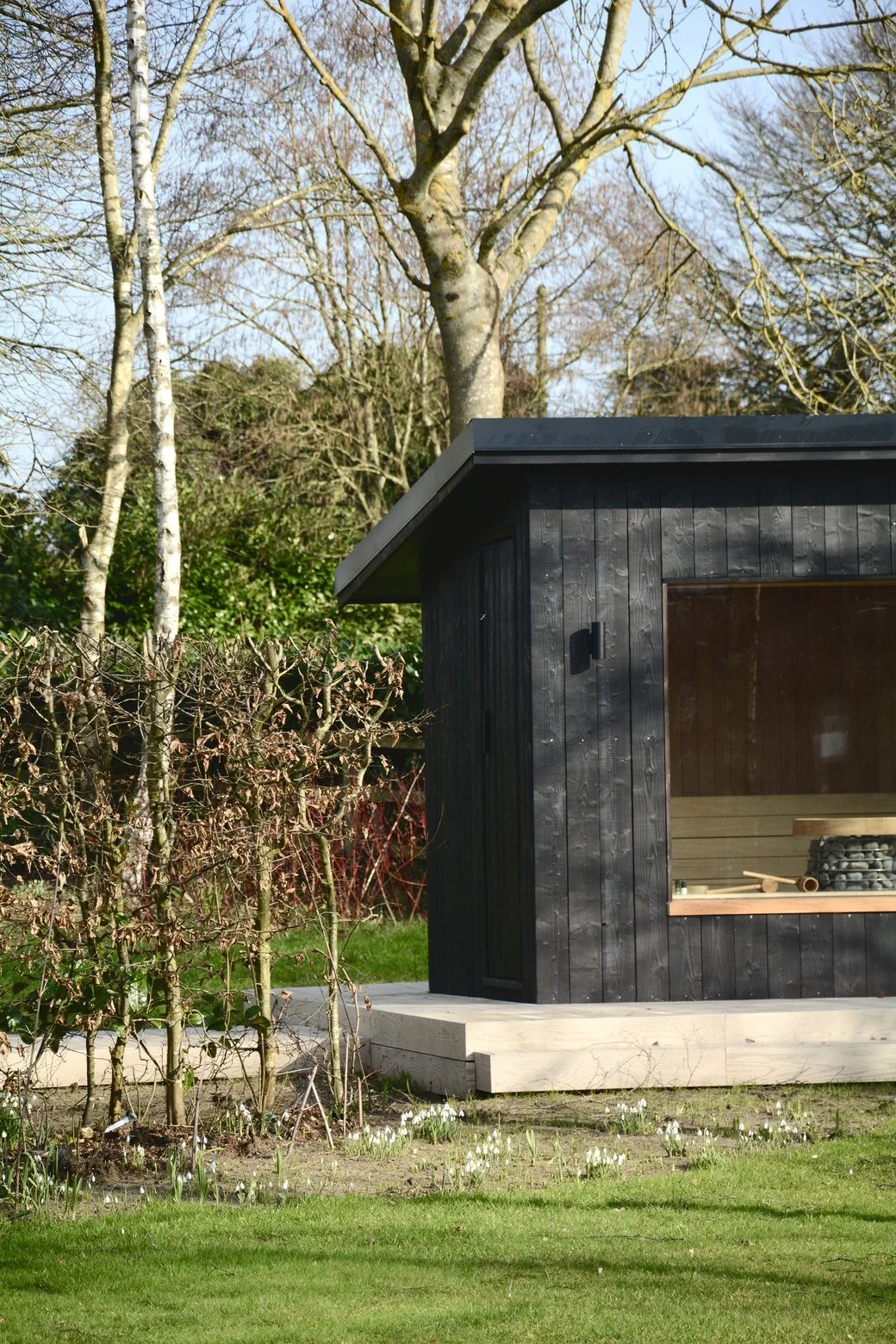
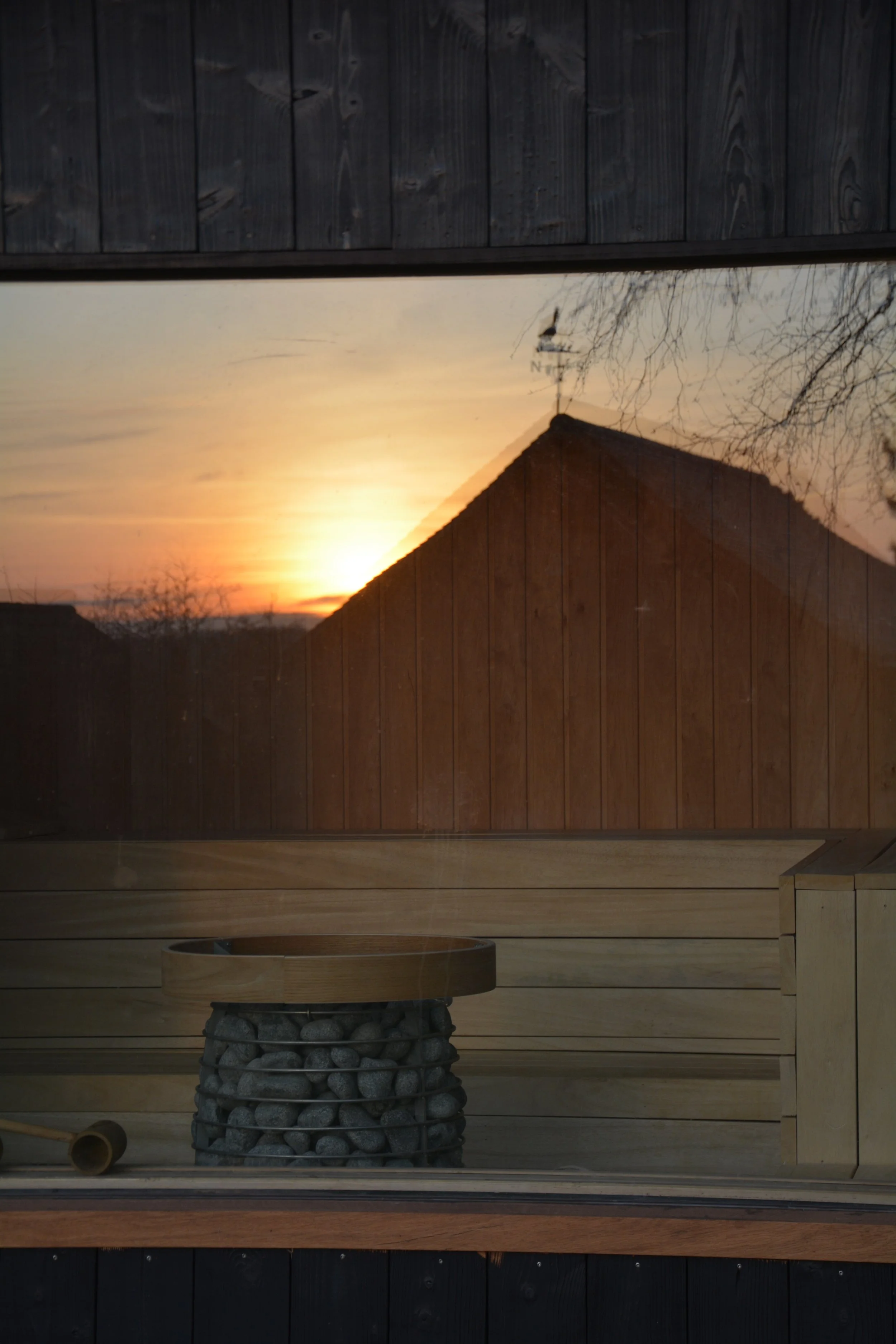
Rather than treating the sauna as simply a product, we approach each project architecturally.
the surrounding landscape
views and orientation
approach and access
light and privacy
how the sauna integrates with the wider property
The result is a sauna space that feels intentional, calm, and connected to its environment.
Final Thoughts
In many cases, a garden sauna in the UK can be installed without full planning permission, particularly when designed sensitively and kept within Permitted Development guidelines.
However, every site is different, and factors such as location, conservation restrictions, scale, and installation method should always be considered carefully.
At Grain Saunas, we guide clients through this process from the outset, combining thoughtful design, low-impact installation methods, and handcrafted off-site construction to create outdoor sauna spaces designed to last for years to come.
Interested to find more about our sauna builds? Why not drop us a line and we can organise an initial phone call. We look forward to hearing from you.